

Orders
Shalon Brethren
The Shalon Brethren, or the Katalitors of the Order of the Temple of Gralon and Salimerat in Shalontor, sometimes known as the Temple Knights, was a Silvonian order founded by Gralon from among his warriors. Over time, it evolved into a deeply religious organization devoted to Agath, the mountain god.
The order experienced two major periods of rule in Yanakhon. Though both were relatively brief, each left a lasting mark on Yonian culture and politics.
After Gralon’s exodus from Harachim, the Shalon Brethren possessed the only surviving copy of the Prime Code, granting its knights a monopoly over the Secret. Following the fall of Gralon, however, other factions recovered copies of their own, and it took the Brethren nearly two hundred years to reclaim their standing under Salimerat.
When the Iron Pact conquered Ionia and in the ensuing Fall of Harachim and the hunt for the lone survivor, most of the order was shattered and driven into exile. During the First Ark Crusade, the remaining Secret-Keeper Knights attempted to record the Prime Code, but failed. After the last of them died, the Secret vanished with them.
From then onward, the Brethren’s sworn purpose became the rediscovery and preservation of the Secret. The order regained influence for a time, until the Perilleanic colonial era brought about the destruction of its permanent seat and forced it once more into exile. Even so, the knights maintained their annual pilgrimages to Shalon and continued their search.
When Sagiron discovered the scroll left behind by the Heir and restored the Secret to Shalon, the order was already preparing for a Revolutionary War to reclaim Yanakhon. The Crimson Army crushed the uprising, killing all but one knight. That survivor later joined the cause as one of the Chosen and eventually re-established the order.

School Guild of Harachim
A

Knights of Phanx
A
Knights of Blackwater
A

Saqurama
A
Legion Selitor
The Selitor, or Seler Salitor, meaning Silver Guard, began as a corps composed of the finest legionaries in Seleria and served as the imperial guard of the Selerian emperors under their direct command. In time, it expanded into a full legion and became the spearhead of the Selerian Army.
During the era of the Yonian States, the Selitor stood among the most capable elite military forces of the age, and was widely regarded as the best equipped. Its strength was drawn from the vast resources of the Selerian Army and the wealth of the Silverland khonnor that sustained it. Auxiliary Legions Silver and Purple supported it.
Although the legion possessed no navy of its own, it operated closely alongside Legion Navaron and its silver marines, who effectively served as the Selitor’s naval arm.
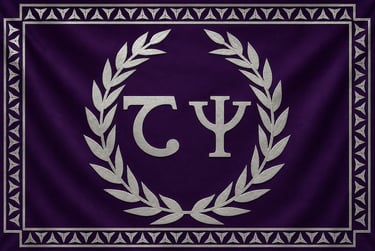
Legion Selitor banner with a Yalian star meander and the letters S and Y, representing the legion's slogan "Seleth Yanim", roughly translating "Prosperity is Ours". Note: the later slogan form Selenth Yonia rooted from this.
Meusarion
Meusars, or the Fire Riders, were the elite strike force of the Perilleanic Empire and the most feared and recognized military formation on all of Antoria.
Their formal title was Linquiria Prectelion Meusie Sarcirixae Perillion Balbouricon, meaning the Fire Rider Protector Order of the Balbouric Empire under the Northstar.
The Meusars answered directly to the Royal Family, serving beneath princes and high imperial officials rather than within the ordinary command hierarchy of the Crimson Army. In addition to their role on the battlefield, they were entrusted with the protection of royalty and the empire’s highest-ranking authorities.
They were trained at the Artican Academy, whose regimen was considered among the harshest in the empire. Only the most capable and loyal candidates endured the full course of instruction. Those who succeeded were granted the rank of knight within Perillenia, along with considerable privileges and rewards in recognition of their service and loyalty.
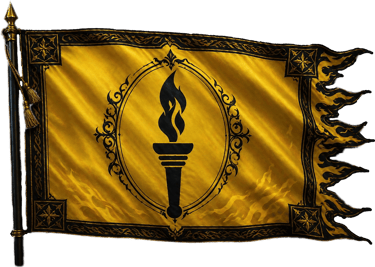
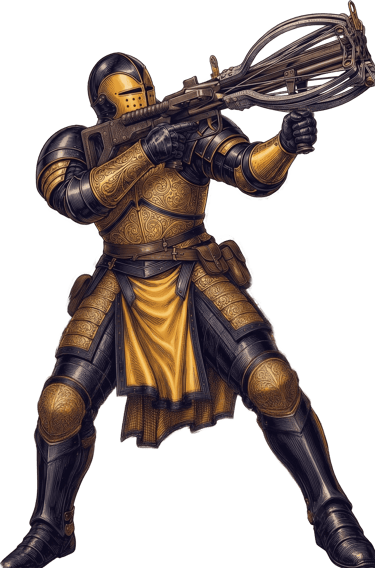
The colors of the Meusars were yellow and black, a deliberate distinction from the Balcour Red crimson banners of the Crimson Army. Mecour Yellow belonged exclusively to the Meuriorian Royal Family, and the unauthorized use of the color within the colonial hemisphere was considered a punishable offense.
Every meusar was equipped with the finest gear the empire could provide. Each received a custom-fitted suit of armor, lightweight naval equipment fitted with buoyant vests, and specialized accessories suited for a range of climates and environments.
Their standard armament included a quadbow, a dual handbow carried in a thigh holster, and a hand-and-a-half thrust blade(shringer). Beyond this, the meusars maintained an extensive array of supporting weaponry, from cavalry lances to longbows employed as artillery weapons before an assault.
Every meusar was also assigned a mount for cavalry operations.
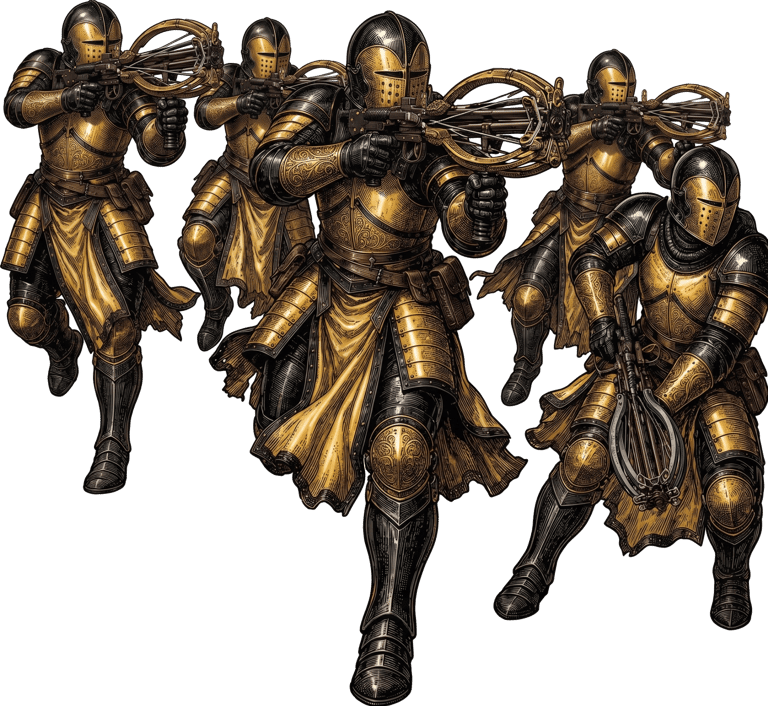
Meusar combat doctrine centered on speed, shock, and the application of overwhelming force.
In their role as cavalry, the meusars favored direct and crushing charges intended to shatter enemy formations through momentum alone. When deployed as strike units, they targeted vulnerable points in opposing lines while the Crimson Army maintained pressure along the main front. Whenever possible, meusars avoided open conflict, preferring ambushes and striking the enemy at its weakest.
Among their ranks were the knight-detectives. These operatives dressed in plain clothes and were extensively trained in infiltration, espionage, and assassination. Their work carried them far beyond the battlefield and deep into the political and military affairs of rival powers.
The Meusarion also maintained its own fleet, known as the Yellow Ships, or Noireae Meuce. These vessels ranked among the largest and fastest warships of their age, built with extensive sail systems and long banks of oars to maximize both speed and maneuverability.
The ships carried heavy artillery, including quad counterbows and catapults, and made extensive use of incendiary missiles during naval engagements. Each vessel possessed a reinforced ram for sinking enemy ships as well as a boarding ramp designed for close assault actions. Every Yellow Ship was overseen by a prince.
Civil Organizations
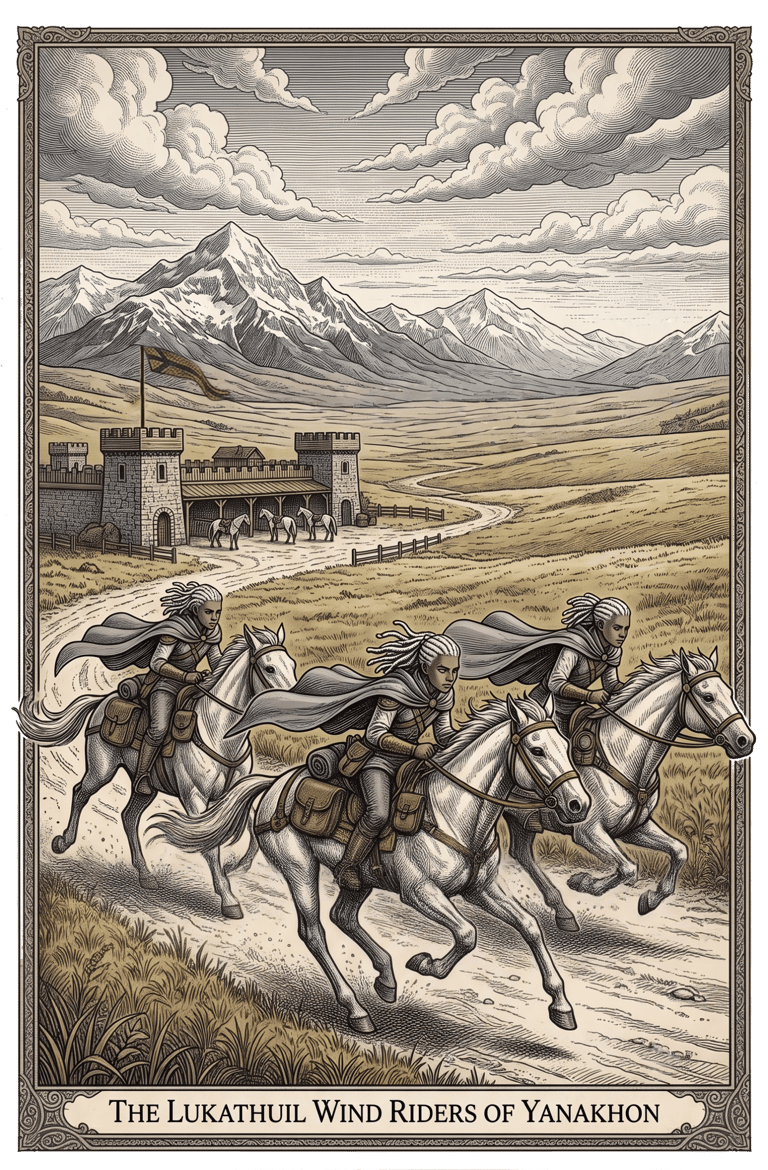
The lukathuil, the famed Wind Riders of the Ikharonian Republics, were a messenger organization relying upon selkhin striders, breed of sinewy, fast horses. They had refined the breed for generations, and the finest bloodlines were considered valuable property. Selkhin striders were never wasted in war, but reserved exclusively for scouts and messengers.
Light as their frames were, the horses could not comfortably bear a fully grown man over great distances. Because of this, the Wind Riders recruited only the leanest and lightest riders available, and in some eras youths as young as twelve seasons were commonly employed as messengers and couriers.
The Yanakhon Lukathuil Company was established shortly after the end of the Revolutionary War in order to maintain mail communication between the far-flung khonnors of the vast continent. To support the riders, waystations were constructed across the land at carefully measured intervals, allowing exhausted mounts to be exchanged for fresh striders. Through this system, Wind Riders could sustain astonishing rates of travel across the plains and interior roads.
For a long time, the Wind Riders remained indispensable to communications. The Company employed hundreds of riders, handlers, stablekeepers, and route wardens. Messages that once required weeks by caravan could be delivered in mere days by the lukathuil. However, the construction of the Lightway signal beacon network sharply reduced the need for mounted couriers between the major cities of Yanakhon.
Lukathuil - the Wind Riders
Capotsi (Police)
Capotsi as a word rooted from capot salitor, or market watch (capot = market square, forum, place of trade, meeting, and decisionmaking; salitor = guard, watch).
It was a distinct civil order branch originating from Selerian city-states. The capotsi were lighter-equipped and armed with the sole purpose of conducting civil order matters.
The capotsi was the lowest-level civil order, and it was under each khonnor's chain of command. The chief of capotsi was called capotral (capot + tral = market + lord, sir, master, superior).


The capotsi's triseasonal equipment. Their gear was designed to be worn all day, every day, and prioritized mobility and comfort over combat proveness; however, heavier gear was generally reserved alongside with the support of the khonnor guard.


The capotsi ratchet in action along with a whistle.
Palpuric Club
asd
Schools and Academies
Methurm Academy
Turmthron University (Highland)
Calligraphy School of Harachim
Yonton City University
Yambar University
Merial University of Teleng
Imperial University of Silver City
Ikhanic Academy
Telkhen Archives
Kanaapan Glassturners' School
Companies and Guilds
Andalarrath Corporation (AACP)
The twins Nasarat and Lasarat of Andalarrath (="whitetop", from their albinistic features) cornered Rambor during the Revolutionary War and made him to sign a paper that granted them the Gralon's Cut of 10% of the Telengthang reserve treasure they had stopped being shipped away by the Crimson Fleet. That hoard contained much of the valuables that the Perilleans had looted from the Yonians during the colonization. After the war's end, the Yonian States interim parational congress had to acknowledge the contract to keep its legitimacy.
This made the twins rich. The two, who had been the runner-messengers of Yonatsi prior to his imprisonment, were well-connected and had an intimate knowledge of Yonton City's business affairs, in both good and dirty; they also held the City Triad Council's seat, representing the Yalians.
With their newborn wealth, they began conducting (mostly) legitimate business, buying, bribing, extorting and paying off anyone and everyone. They quickly cornered markets in many sectors, buying off guilds, and soon entire fleets.
Their business extended to almost anything, from baggat herding to operating the finest artisan jewelry guilds - and military equipment manufacture.
Yanakhon's seventy-two khonnors were building their khonnor guards, and alongside them, numerous independent Armed Orders were rising, all in the market of buying gear and weapons.
Andalarraths smelled the opportunity, investing copious amounts into establishing and building a network of guilds to answer this demand. They saved no expenses, hiring the best masters of every art.
In many ways, the Corporation's way of conducting business was unprecedented, in both good and bad. Andalarraths were true Yonton-born: little superstition (and ethics), greedy, and pragmatic. They cleaned off all traditions of the guilds they purchased and the masters they hired, focusing in making the minimum viable product.
This earned their products a very special kind of reputation: the products were always the cheapest, had nothing that did not contribute to its function, unlike artisan-made items often ornated - and were often prone to failure after a period of use.
Ultimately, it was politics that made them truly wealthy. The paration had agreed to the Yalipan peace treaty, forcing the Yonian States to pay reparations to the Colonial Empire, in gold, no less. But Andalarraths stepped in, offering a deal that the paration couldn't refuse: they would sell their cheap products to the Perilleans against the gold they had been given. Andalarraths got the profits, the state got part of its taxes, and the money flowed back into Yanakhon.
They cemented their position as the main supplier, earning the trust of the merial government, and got access to many of the projects only they had the resources to carry out, including the Yonian skyship program, and the building of the Lightway.
They actively chased new deals overseas, and it was the Corporation that got a very special offer from Hellornia: a keg of dragonpowder. The events that followed brought Andalarraths at the focal point of a seething political crisis - and a world war.
The Corporation had many nicknames, most common being Ancap (from Kha ANdalarrath CAPoberament, Silvon for Andalarrath Corporation), or AACP.
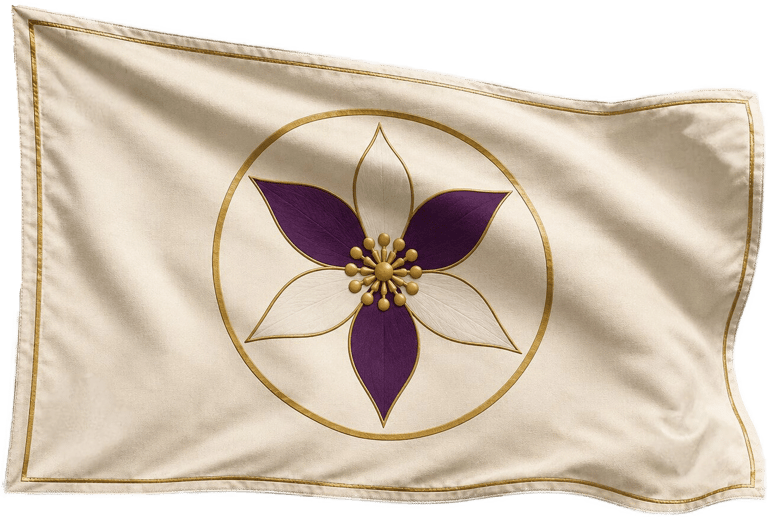
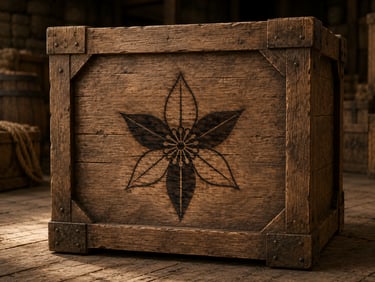
AACP used the yalian flower as its logo.
Shrillingers Glassturners Company
Yonton Shipyard
Ikhalian Shipworks
Khalithron Mining Company
Khalithron Tin Company
Khalithron mine was the largest tin mine in Ionia, located deep in the Southern Wastelands.
The Tin Colony was left from the Perilleans after the Revolutionary War, and taken over by Selerian Expeditionary Legion Milonia after a brief time under the control of local warlords, to secure the tin supply.
The Yonian States Paration formed a joint company controlled equally by the king of Khalikhon khonnor and the Merial Government, as per the constitution regarding the distribution of natural resources.
The Bir gem mines nearby were joined into the company.
Shrillingers Glassturners Company
The Glassturners Company was owned by the Shrillingers family hailing from Muurlands. Its main workshops were located in Kanaapan. It was one of the most reputable glassworkers in Ionia, most famed by its skilled handling of Nirkhaling clearglass.
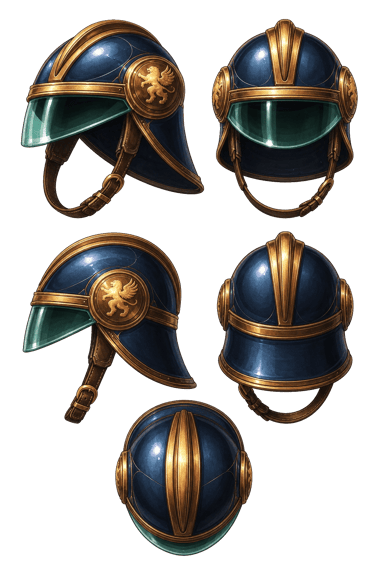
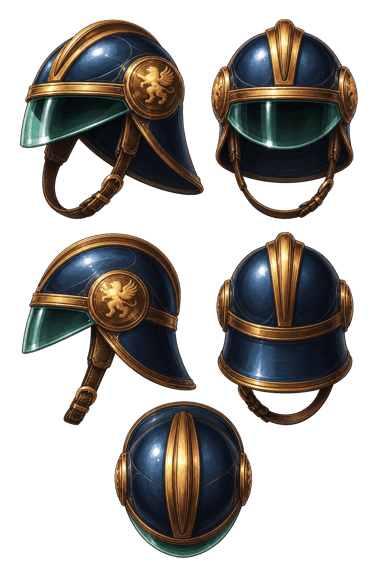
One of its most unusual works were the visors for the Ranger helmets. These were made from blown and roll-formed pieces of high clarity glass that were quenched in smoking hot oil.
Criminal Organizations
River Foxes
A
Ranck Pirates
A
Yalian Syndicate
A
Kharun Rogue Band
A
Military
Legions of Seleria and Yanakhon proper
The Yonian States had no standing legions during peacetime, however, orders had the liberty of retaining their own. The legion system was inherited from the Selerian Empire, differing from others like the Perillean division system. Ikharonian Republics operated the Republican Guard.
Selerian Empire's legions:
Legion Belseria
Legion Metesol
Legion Methurm (Methurm Academy, training legion)
Legion Minatsi (Capotsi Legion, policing the capital district)
Legion Narwin
Legion Navaron (Naval Expeditionary Legion)
Legion Pandur
Legion Saravon (Capotsi Legion, policing the Selethron proper)
Legion Selensil
Legion Selestar
Legion Selestorm
Legion Selitor (Elite Legion)
Legion Silantis (Naval Legion)
Legion Silaturm
Legion Taranthurm
Legion Yonturil – Selerian Imperial Guard
Auxiliary legions:
Legion Gold (Infantry)
Legion Purple (Infantry)
Legion White (Infantry)
Legion Silver (Infantry)
Legion Wind (Naval)
Legion Rokker (Coke Ships)
Legion Lightway (Messenger)
Salamesin
Salamesin (Salat + mesin = secret + equipment/troop/weapon/device/agency) was the intelligence service of the Yonian States acting directly under Vice Merial, only having a designated messenger colonel in the Armament Vicellery.
It took shape already during the interim phase before the permanent Yalipan Peace Treaty, when the Chosen acknowledged that some Secret artifacts are likely missing. Ikhira the Andalite took the lead, and indeed, the service initially consisted mostly of River Foxes, low-level canal gangsters who she sent around Teleng to offer top seler from a nameless buyer for valuable gems or unknown ciphers, no questions asked. The office filled with baubles, and after two months, the task was abandoned.
After the Second State Paration of 325, a re-organization took shape, and Ikhira was officially nominated as the Chief Secretary. She and Arhim had already sought further lands from the map, and Salamesin began recruiting persons of various origins as spies to be sent to the far reaches of Antoria.
Salamesin was organized right along Legion Thunderfire, whose academy was established in the Highland Castle's old wing. In essence, all Rangers were automatically assigned as spies.
Saginair Rangers (Saginair Sarkirim)
Saginair Rangers, or simply the Rangers, was a generic term used for anyone riding saginairs in Ionia. However, during peak empire phases of Yanakhon, a specific organization of that name existed.
It is necessary to clear one thing here: A Ranger is always a Secret-Keeper, but seldom the other way around. Virtually everyone able to ride a saginair had to know the Secret, for communication with the wild beasts would be otherwise nigh impossible.
Due to the power dynamics of the Secret, these organizations were always small, two-three dozen rangers at most.
First Rangers Wing
It was established by Gralon, the first merial of Yanakhon, as he was able to approach a wounded beast and gain its trust, bringing his trusted Secret-Keeper - warriors together with the beasts. The Twelve Rangers rode to face the Vaskitic dragon in Teleng, using the rising thunderstorm to their advantage and claiming the first true thunderblade, Miloren.
After Gralon's death, fight for power and above all, fight for the Secret began, and the remaining rangers fought, some eventually joining different factions. However, they all met their downfall with the remnants of the realm when Havok came with a dragon and vaskyrs to reclaim the Miloren, an era which ended in Blackwater, where the sword was cast.
During the ensuing decay period and the Great Metorian Era, there were a few known isolated Rangers, who had accessed the Gray Mountains to seek and bond with the beasts.
Second Rangers Wing
When Salimerat fled to the mountains from Harachim, he stumbled upon a lone saginair, bonding with it and crossing the mountains to Ikharonia. With Kharo the Faireye, they traveled to gather the Chosen, most of whom became Rangers as well.
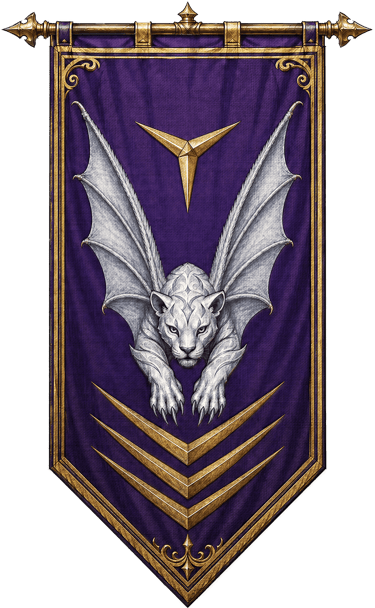
Third Ranger Wing, Legion Thunderfire (Rogulligon Rasathuil)


Ranger Raiment
The rangers had a variety of special equipment needed to sustain them high in the windy, cold skies and to be able to project power. Apart from their thunderblades and sparkblades, they had some of the following:
Ranger Raiment made of mountain baggat leather, a brown suit with a tall collar. It proofed them against the extreme cold, biting winds, and a tight fit assured no cloth would flap loose. Rangers wore no armor of any kind, because their main threat, bolts of thunderfire, cut through the thickest of plates with ease, and any extra weight would reduce their mobility. A thick pair of gloves topped the suit.
Ranger helmet: usually made of forged bronze or steel, with a skirt that provided maximum protection from wind and cold without reducing range of motion. Its primary purpose was to shield them from wind and hitting their head to anything during ordinary motion. The helmet also had a one piece half-face glass visor made of tempered clear Nirkhaling glass, a process perfected by Shrillingers Glassturners Company. It was impossible to keep one's eyes open in the extreme winds without a proper visor.
Lock-in stirrups, steel knobs with a quick detach mechanism pairing to the ranger boot steel heel that fastened the ranger firmly to the saddle. An alternative was to use leather belts strapped around their ankles, but these are much slower to attach and detach. Without proper fastening, it was nigh impossible for a ranger to stay astride during the tight maneuvers.
Saginair saddles were purpose-built seats accommodated for each beast individually to distribute the ranger's weight without reducing the beast's natural range of motion.
On scouting and expeditionary missions, the rangers carried a backpack. Basic necessities were made from lightweight materials. Their diet usually consisted of treasurebread and partunck, on top of what they could source from the local area.


Ranger Legion Thunderfire (Sarkir Rogulligon Rasathuil)
Legion Thunderfire was an elite unit, whose spearhead the Saginair Rangers were. It consisted of top-performing legionaries, whose primary task was usually to support the Rangers. This legion was all expeditionary in nature as it was formed after the Revolutionary War for the search of the missing secret artifacts.
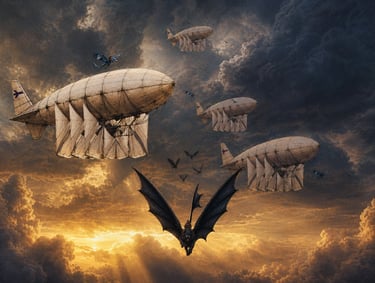
The backbone of this legion was in airmada, and indeed, for the first few years, all skyships were under their command, until their numbers increased. During the Betrayal Era, they commanded a total of seven skyships: Andalion, Erikhon, Ikhakhon, Harachim, Yonton, Thangomitho, and Metoria. During any operations, they used these ships as their flying airbases and could remain airborne for weeks on end, only gracing the waves every few days to stock for more coke.
To secure their supply, which was vital for operations, they also had their auxiliary legion operating coke rokkers, as the commanders didn't deem other legions trustworthy enough.
The Salamesin operated alongside this legion.
The Lightway (Antoric Relay Network)
In 327, solutions for slow communication were feverisly mulled over in Teleng, when mountain hunters from Morakhon suggested using solar mirrors to transmit short messages by flicking the mirror, sending strings of flashes, whose meaning was agreed upon prior.
The idea was initially dismissed and sent to be discussed about for the Rangers as a combat communication method, but Professor Gilgavangel himself came to suggest that the idea might actually work, and he already had solution for the night-time as well: the lamp-plants of Masorania.
After conducting some tests, the idea was further expanded, and a test beacon network was built along the Teleng perimeter wall to the Highland University. Towers with trained mirrormen proved the system highly capable, with delays as low as minutes between the few relay stations. The mirrormen dubbed it as the Lightway.
Arhim decided to keep the system secret at least as long as they could perfect it. Further test networks were built along the coasts of Westbottom, and by the next year, a string of beacons reached Yonton City. In ideal conditions, a message could be relayed in under 15 minutes over a distance of fifteen hundred miles. Previous record was held by the Wind Riders: four days with waystations for new mounts.
The revolutionary potential of the system was immediately well understood: messaging delay would fall from weeks to months to mere minutes to hours. Behind closed doors, larger lines were being drawn already. With the Vicor of Armaments, Arhim ordered an Antoric Relay Network to be built along the major mountain ranges following the common windheads, with crews being airlifted there in rotation.


The Skyships and Yanakhon Airmada
Perilleans had used hot air balloons for messaging and in a few instances in military operations, including a meusar team infiltrating the Blackwater Castle during the long siege. Those balloons, made of fine fabrics and sealed with cartoph paper were small, unreliable and a fickle to fly.
Professor Gilgavangel had studied - among most other things in his workshop - these balloons in depth, figuring out their weaknesses and had came up with many ideas, however all of them required materials and technology far too expensive and intricate to be doable.
His list of needs was nothing short of containing some of the most expensive materials on Antoria: anduran spider silk for the canvas, sarpawood for the hull, windsilk for the riggings and the sails, custom-forged lightweight furnaces made of duran able to sustain the heat while paper-thin, and a plethora of other things, and a skilled, fearless crew. Preferably someone to scout for windheads, too, to keep the ship in motion. Most considered the concept of flying ships a drunkard's dream at best, a fool's errand worth a fortune at worst.
That was, until Arhim, his good old friend, who happened to be the Vice Merial of the Yonian States, and the holder of the Yonian States' treasury that had swollen beyond measure during Pax Yanakhon, had a talk. Seeking new innovations to cement the growing Yanakhon's power, he, after some closed talks with the Treasury Vicor and the Parational Armaments Committe, granted him the funds to build a prototype. The project was, as always, most secret.
For building the first concept model, an old barn in the outskirts of the town of Turmtor was converted to accommodate the frame. Greatest struggle was in obtaining sufficient - or rather any - quantities of anduran, for which they sent an expeditionary company to Shilon Mountains in the heart of the Mainland, isolated by rivers and endless marshes. With many troubles and challenges, it took them two months to gather sufficient quantities of spider silk and ship it to Teleng, where a small army of weavers were hired to produce countless sheets of anduran.
Meanwhile, shipbuilders were tasked with an unconventional job: to build a ship that had to fly, too. It was made from sharpawood, and for many beams, they used spear rocoo reeds to minimize weight. The furnaces and vents were ordered from Harachim, to be made from duran.
Bringing everything together took the entire year and the ensuing cold season; they had to build a support structure above the barn to install the envelope. Soon after Belation spring festival, Gilgavangel was confident it was ready for its maiden flight, and the hull was loaded with coke. To keep it secret, they waited for a dark, cloudy night, before filling the envelope. At midnight, the ship parted from its supports, and to everyone's awe, rose into the clouds. They had trouble steering the vessel, and had to land into the Highland lake, but nonetheless, the concept was proven.
Rigorous, repetitive testing brought the ship closer to be usable. First, they crafted the ship to purposefully suit for water landings to be brought into low maintenance standby and for easy filling of coke from supply ships. For steering and speed increase, they installed more riggings, including retractable sails reaching all the way to the bottom of the ship.
They concluded the ship needed scouts for windheads in order to move; for in still air, the ship was unsteerable and useless. Sagiron had noticed the windheads early on with Yandariel, the Rangers scouting them more; the saginairs seemed to be intimately familiar with wind movements in the Gray Mountains.
Using Rangers for the purpose was out of the question, so they turned to Vaskites, hiring a group of vaskyr gliders as wind scouts; they were named windcatchers. Two was hired for the ship.
To keep the project secret, they furthered their testing range, by flying along the mountain ranges; for the windheads rising from the sea and lowlands flowed along these ridges. It turned out the Antoric skies boasted a network of wind corridors, along with rogue windheads and wind fronts moving along with weather.
Getting familiar with these wind corridors, they mapped them out as they trained with the first skyship, and soon reached the farthest ends of the Ionic continent. What took a week from the fastest windhorse messenger or a month on foot, took a day from a skyship riding good winds. Two more skyships were already ordered.
The next flight headed to the ocean, where ships loaded with coke ("rokkers"; rokh = coke, stone coal; nicknamed by the Yalians in the crews) were sent to provide supply. They crossed the Blue Sea overnight along a wind front, refueling near Pommershell. During this flight, they discovered high sky jets, invisible but powerful streams flowing far above any clouds, at heights were coldness was eternal and air too thin for all but those used living high up in the mountains.
After multiple passes between the western and eastern coasts, they were ready for the greatest proving: flying around Antoria. Rokkers were sent midway for refueling, and after the calculated wait, they took from Lake Turmtor, heading east. First refueling at Gorondom Strait was almost about to fail, for the jets proved faster than expected, and they skipped the first ship and had to wait an extra day floating standby for the ship to reach them, but the next ship at the Antoric Islands was head-on. Third stop was back at Lake Turmtor, proving the ultimate capabilities of the skyships: riding the high streams, they could circle around Antoria in seven days in perfect conditions.
A waystation was built on the Antoric Islands, for they were desolate and far from any ship routes, hence an ideal location for keeping such a large project secret.
The project was ludicrously expensive, far beyond what they had feared. Vice Merial Arhim had difficulties explaining the undetermined expenditures to the parational congress, but with the help of Andalarrath Corporation - which was involved in the project - they made a loan arrangement to distribute the costs over to the next year, by which the project would likely be already leaked to public. He wanted to have every extra day to test and proof the new technology before the Perilleans or any other potential foes found out. Rumors about pale canvases drifting in the sky circulated, but the idea of flying ships was so ridiculous no one even entertained the possibility and they were waved off as clouds or some banners gotten loose.