
SELER
The seler was the historical currency of the Yonians, in use since the Silantic Era. The word literally means “in silver” in Silvon language. Name variations include sheler (Ikharonia) jaler (Yalians), zeler (Ranck Ironfolk), célere (Palpurians), and shiller (Continentals, Muurland).
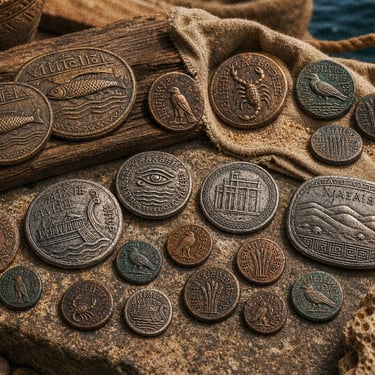
Coins were commonly minted from gold, silver, bronze, and brass. During different eras, various designs existed; the Selerian Empire favored the merial-emperors, with Silver Goblet in the tails, while Ikharonians favored elements of nature and the Seal of Silantis. During the Yanakhon rule, saginairs became a ubiquitous theme for gold; Gralon preferred his profile, following the Selerian emperors, but Salimerat employed the Yalian Star as the seal of the state, which remained in use therefore.
One seler was officially valued as the equivalent of one khoron in gold, which was 72 sers (grain-units), equaling 5.184 grams of fine gold. In practice, gold selers were seldom seen outside state accounting and larger business ventures, and the silver seler coin was the de facto standard of value.
One silver seler was about 1/36 of the value of one gold seler, weighing twice the golden one.
In daily use, the trence coins cast from bronze or brass were the most common currency of trade. The most common valuations were four, two, one, and half-trence coins.
Year 326 average exchange ratio at the Teleng Auction Market was 1 gold : 36 silver : 80 trence. Comparable valuation of common coins in 2025 gold price (124USD per gram):
1 gold seler, 5.184 grams; $642
2 silver selers, 20.736 grams; $36
1 silver seler, 10.368 grams; $18
½ silver seler, 5.184 grams; $9
4 trences, 37 grams; $0.40
2 trences, 18.6 grams; $0.20
1 trence, 9.3 grams; $0.10
½ trence, 4.67 grams; $0.05
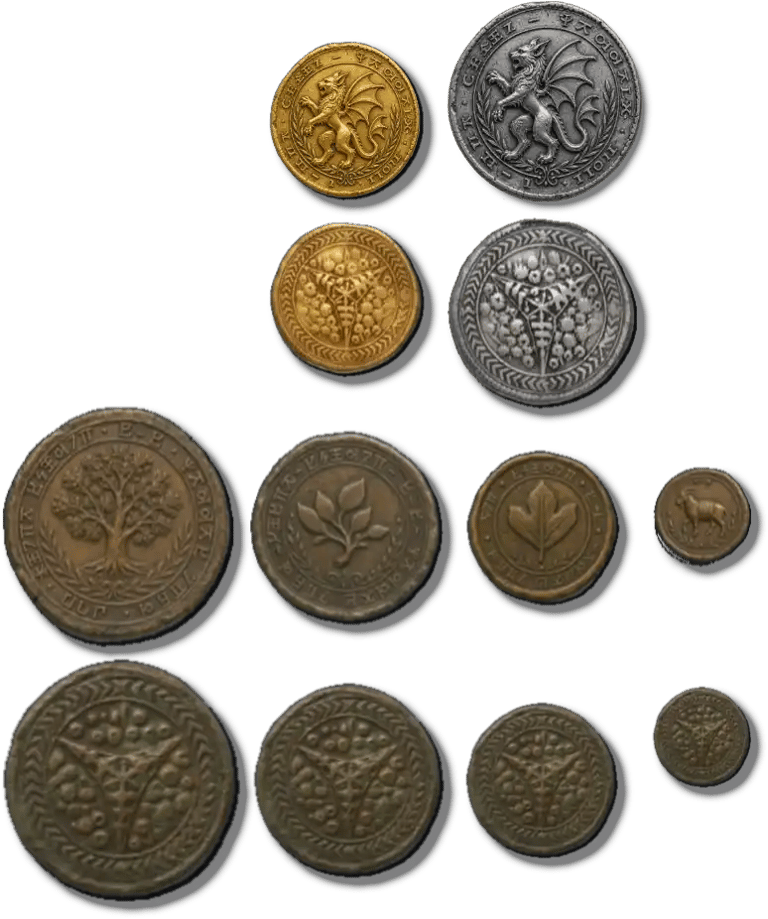
In the pictures, presented are: a gold-seler; a silver-seler; and bronze coins in nominations of four, two, one, and half trences.
Gold and silver seler heads: saginair and text "AKHA SELER - YANNAT KHONNOR - 325". [ONE SELER - YONIAN STATES]
Bronze trence heads: 4tr - yaliwood; 2tr - yaliwood branch; 1tr - yaliflower; ½tr - baggat. Texts: MEKHA/BETHA/AKHA TRENKH - TT - YANNAT KHONNOR - 325". [FOUR/TWO/ONE/HALF TRENCES - YONIAN STATES]
(TT = Telengthang mint).
The tails of all Yanakhon coins contain a Yalian star and seventy-two chevrons, the national seal of the Yonian States.


PETINX
Perillean Petinx (In Palpur - Petinx - money)
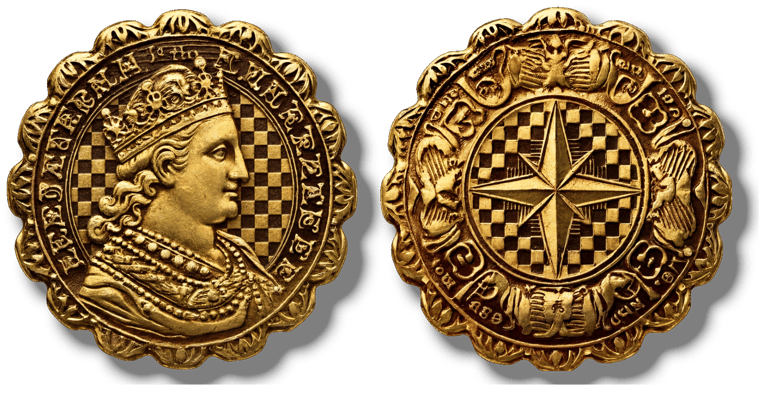
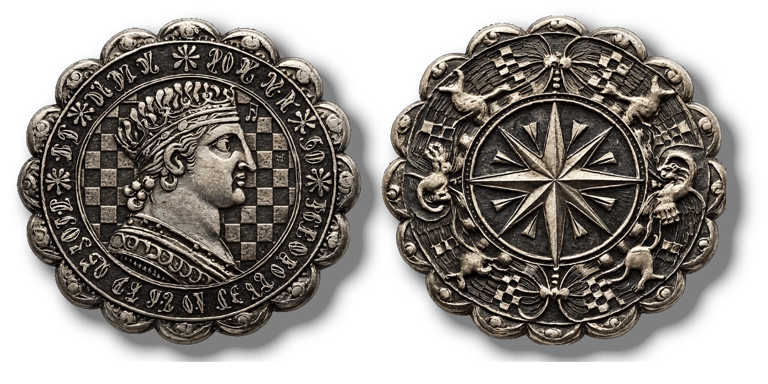
Petinx originated from the beginnings of the Palpuric Royaldom, and had remained as is with little changes. The coins were divided into golden Ceulions, silver ceptels, and a class of low-value peasant money, blote. Transliterated, these are called yulions, septels, and platers.
Platers were minted from bronze, brass, copper, and even lead, which caused their value to vary locally. Lead platers, specifically, were used in slave colonies and settlements and acted more as tokens, which had no value outside the specific community. This made the money effectively worthless to steal.
KRAMMER
Kondar Krammer
(Renkeranck Coins)
The Kondars used brimmboric steel for their coins, mined from the Ramrock and Grimrock mines. It had two properties: the alloy was very resistant to rust, and it could be hardened so hard ordinary tools could not bite it. Cash Rancks carried two files, an ordinary file which was not supposed to bite, and a special file made from valcamic steel which could scratch a krammer to confirm the authenticity of this money.
Virtually impossible to counterfeit or clip and in limited supply, controlled by the Renkeranck Guild running the mines during their time, they were even valued against gold and considered a stable currency during the Kondarian Iron Empire era. Many coins remained in circulation in later eras due to their durability and their presumed value protected them from being smelted, as they were made of the finest weapons grade steel.
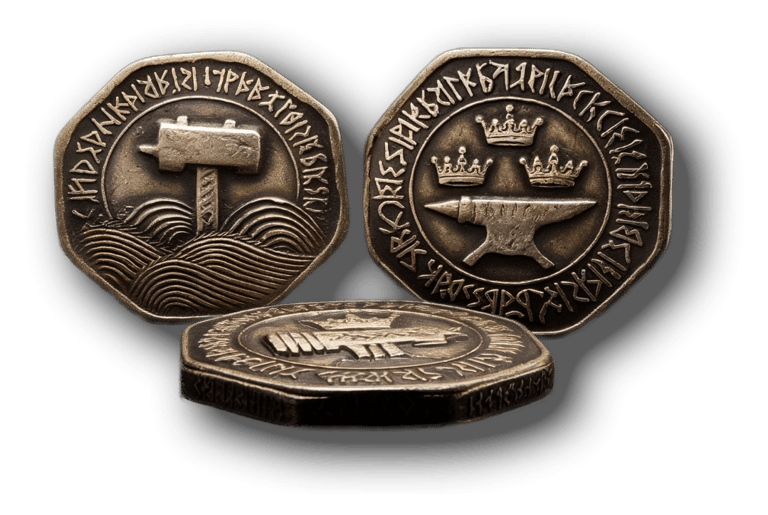
Typical krammers were octagonal in shape, and bore depictions of things common to Ranckish culture: blacksmithing and mining paraphernalia, ships, and the three crowns of the Condarian Iron Pact.
Hellornian Helvar
(Dragonscale Money)
[Sil. rasakhul garat peting; Hel. sparkhelvriz]
Definitely one of the more unorthodox types of currency, the dragonscale money of Hellornia consisted of pieces of collected dragonscale. Hellornian dragons shed translucent, iridescent scales of various sizes and colors, and due to the small population and their remote dwellings, these scales came extremely rare. The scales rang in tone something between that of a metal and glass, and were also incredibly strong.
Hellornians used them as the ultimate measure of value, and the wealthiest warlords - and the Dragonriders of Hellornia - made armor from them. It was one of the only materials able to withstand thunderfire.
Despite (or rather due to) its rarity, the currency was little known outside Hellornia. Vaskites, however, did also use dragonscales as armor.


Thaal, of Selassinia
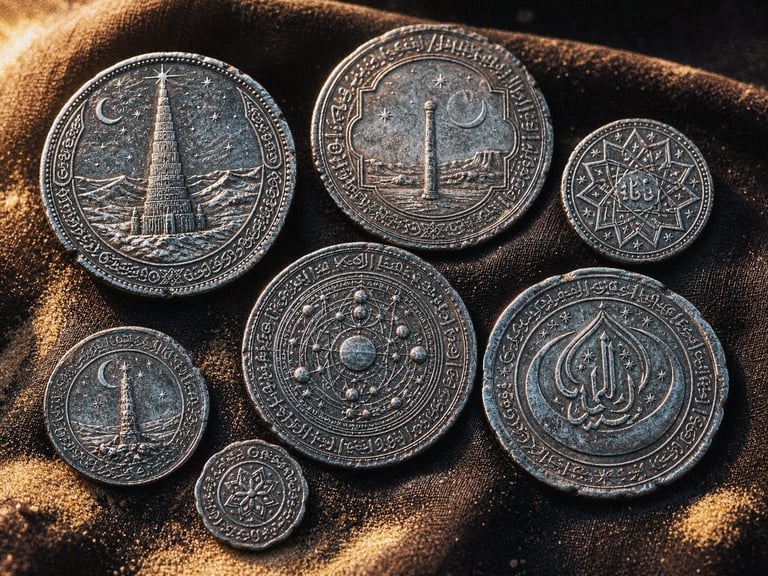
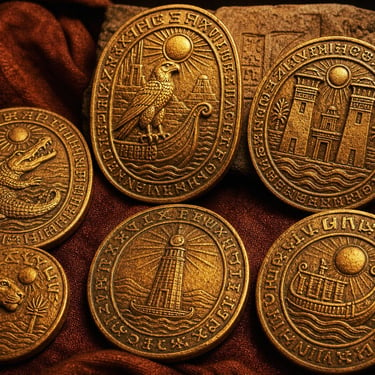
Thaals featured elements from Selassinian mytology and culture, such as the Khabar Tower, the Southern Night, the contemplation pillars, and the stellar cycles.
Vlatar, Vaskites' starmetal coins
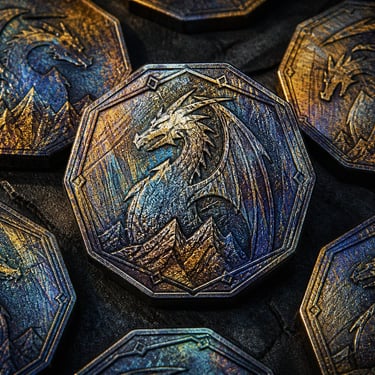
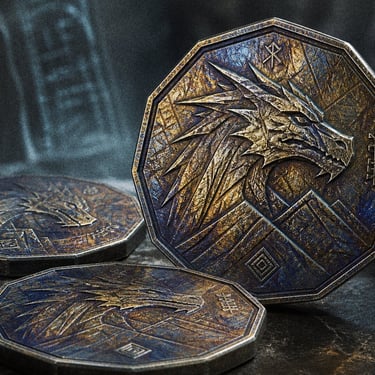
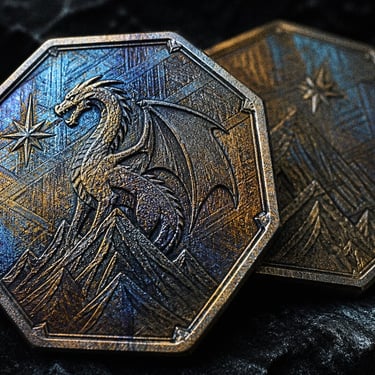
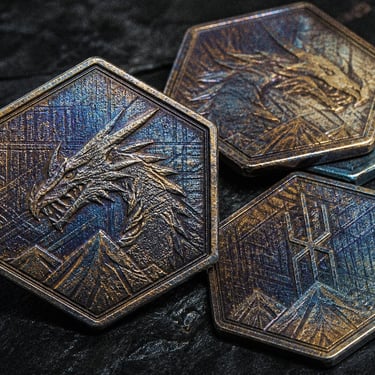
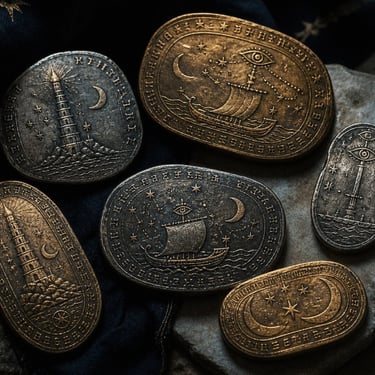
Vaskitic Vlatars were made from a unique starmetal, which produced an intriguing iridescent hue and metal-grain Widmanstätten pattern that was unique to the meteoritic steel. Mountains, the northstar, and the Grand Dragons of Vaskimortos and Stormhart Glacier were common themes, but also swords, tooling, and boats were seen.
Rahi, of Masorania
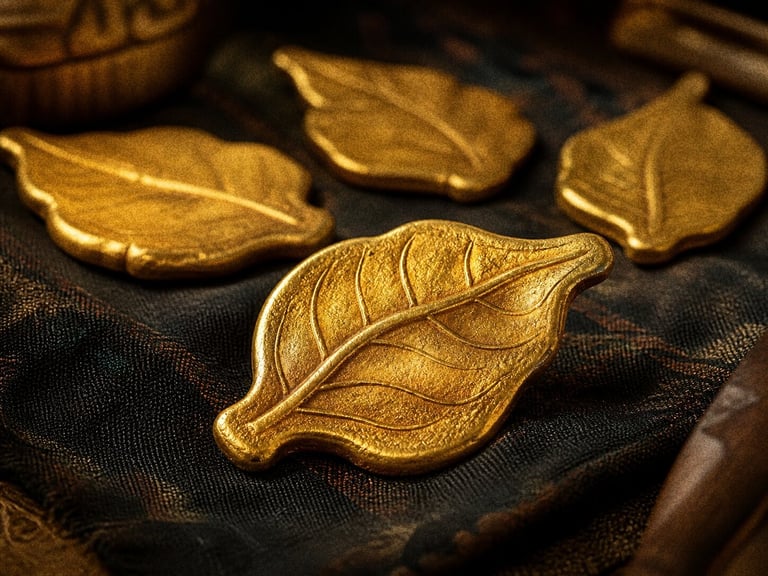
Masorans heavily employed natural theme in their jewelry; rahi-leaf coins were made with cast molds shaped with actual leaves.
Samporyll, of Shambor
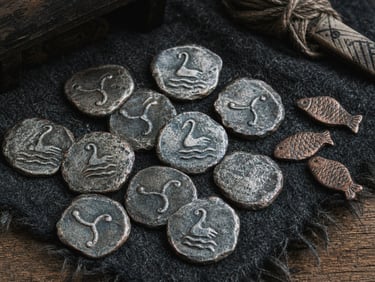
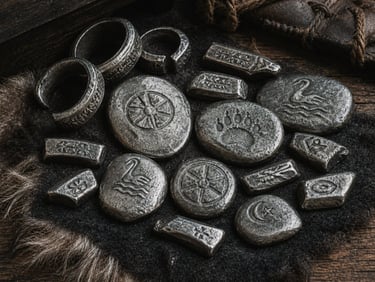
Shamborian coins depicted many natural elements important and mythical to the folks. They include the magatine mill, the Pelonnian Swan, the Northstar, the Wildbear, and many others.
Ängrel, Ängerian dwarf-folks' gold
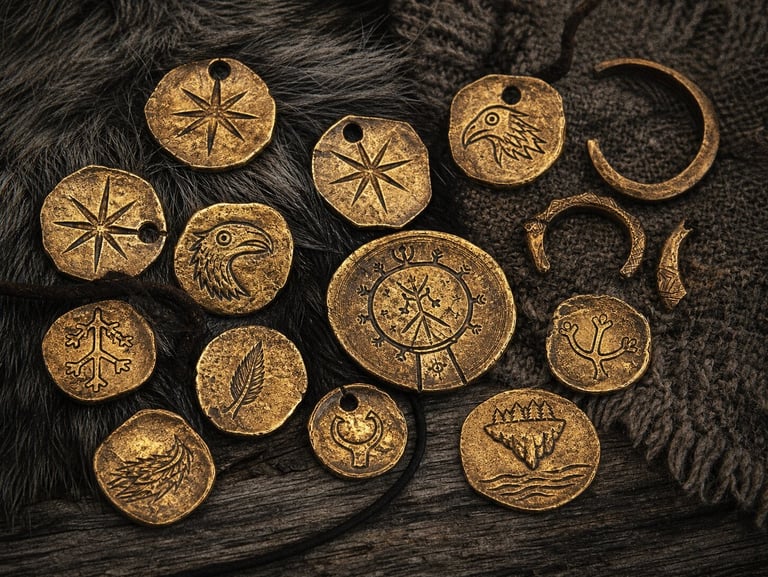
Although there were dozens of different currencies in Pelonnia, the Ängerian dwarf-folks' jewel-gold-smiths' coins and jewelry was the most valued and trusted. The coins shared common themes across Pelonnia: the Northstar, Busdaric shamanism, floating islands, flora and fauna of the Norths, and mythological elements. Coins most commonly had a hole to be hung from a yarn or to be sewn into amulets, or other trinkets.
Kofor, of Colossia
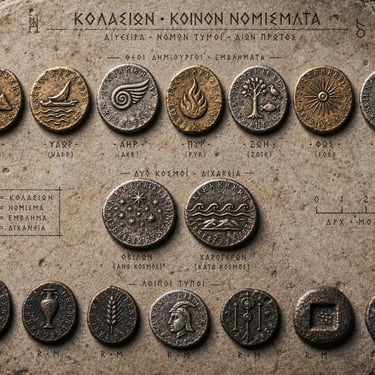
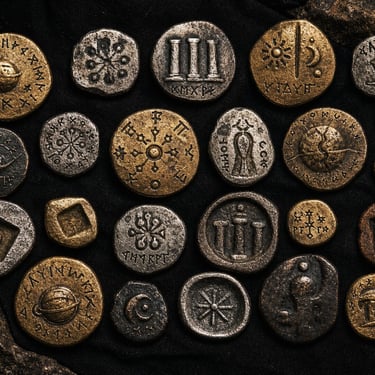
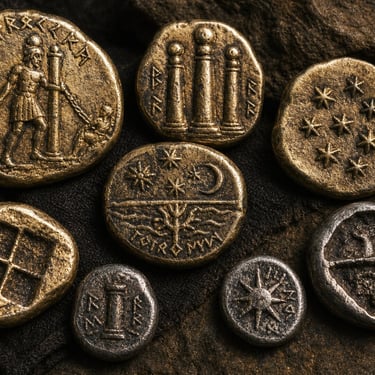
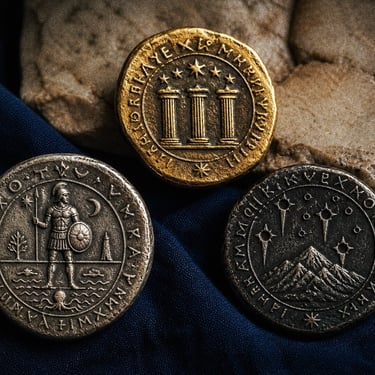
Kofor was the currency of Colossia proper. The money was an amalgamation of the cultures of the Norths and the Vaskites. Colossia had a rich mythology, from where its art and mint drew its inspiration.
Kashel, Naxorian money
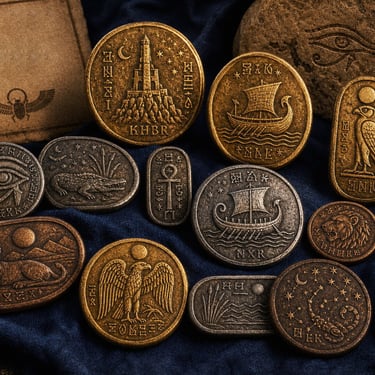
Kashel was a currency widely used in the Windsean-Milonia and in the Naxor Lakes valley area and its adjacent deserts. Naxorians shared some mythology with Selassinians, common themes in Milonia. Naxor Lake valley had many rich deposits of gold, making it one of the biggest producers of gold, and this had shaped the culture's abundance of coinage.