

Foods
Treasure Bread (Dalethem)
Treasurebread was among the strangest foodstuffs known. It was not a plant at all, but a rare fungus that grew only in symbiosis with the Harachimian knotwood, or commonly, treasurewood. Outside the Hidden Valley, only a handful of isolated growth sites were known, and every serious attempt to cultivate it as a crop had failed for reasons unknown. Because of this, Harachim remained the sole producer of treasurebread.
The fungus grew with maddening slowness, but in time it produced broad, finger-thick leaves that were pale gold to amber in color. The texture was crisp and faintly layered, while the flavor was often described as sweet, nutty, and astonishingly rich. Travelers unfamiliar with it frequently assumed the food had been soaked in butter or oil, though treasurebread possessed that fullness naturally.
It was one of the most energy-dense foods ever discovered, rivaling the richest nuts and even packmeat, the preparation of dried meat and rendered fat carried by seafarers and expeditionary troops. Treasurebread retained a small amount of moisture after harvesting, but once properly dried it became imperishable and could remain edible for years without spoiling.
Dalethem, as it was known in Harachim, became one of the most luxurious and sought-after delicacies in the world. Whole fortunes had changed hands over shipments no larger than a traveler’s pack.


Packmeat or Partunck
Packmeat, commonly known as partunck, was a Rammornic foodstuff made from dried meat worked together with rendered fat, spices, and crushed dried berries into a dense, compact mass. The low-fat meat of ironox and wild boar was preferred. Properly prepared packmeat was astonishingly energy-dense and seemed almost impossible to spoil, qualities that made it indispensable among the seafarers of the Iron Empire.
The mixture was commonly pressed into palm-sized blocks and wrapped in waxcloth for transport. Some makers instead dipped the finished blocks in hot wax, sealing them entirely against moisture and air. Sailors claimed a good block of packmeat could survive longer than the man carrying it.
The Yonian States later adopted packmeat as a standard ration for Rangers, airmada crews, and other farland expeditionary forces. Alongside treasurebread, it was regarded as among the most concentrated and sustaining foods known, capable of keeping a soldier marching for days on surprisingly little.


Various foodstuffs
Narnuts grew on the hardy narn bush. Their oil was widely used in cooking, though smiths also valued it as a quenching medium in blacksmithing, where it was said to produce a cleaner temper than animal fat or common oils.
Ironroot was native to Ionia, thought by some scholars to share distant ancestry with the Pelonnian causuck root, though the two plants bore little resemblance in either taste or appearance. Ironroot was tough and fibrous when raw, but after long boiling it softened enough to be added to stews for its nutritional value, where it also lent a deep, savory flavor.
Kibrat root was dried and ground into a pungent spice used throughout the southern reaches of the Mainland. It was similar to the fireroot, but less hot, and richer in taste.
Matate was a starchy tuber native to Pelonnia that had spread across Antoria mostly through Palpurian trade routes and expansion. The plant thrived in colder, drier climates, and for that reason became especially favored among the Highlanders of Ionia.
Carpul was another common root vegetable, mildly sweet and often prepared in much the same way as matate.
Jagolines were sweet red-to-purple fruits borne by the jagoline trees of Yalipan.
Yaliberries grew from the yaliwood tree and were prized for their sharp sweetness.
Comorine was a sweet Selerian fruit originally descended from Milonian stock, though centuries of cultivation had produced several distinct varieties.
Mountainroot was closely related to ironroot but carried a more earthy aroma and a softer texture when cooked. Somewhat rare outside western Highlands, a staple in the Silvonian peasant's cuisine.
Fireroot came from the Ikharonian genga plant. True to its name, it possessed an intense, biting heat and was favored by those with a taste for strong spice. The dried powder was also weaponized on occasion, thrown into eyes and lungs to a great effect.
Karacho seeds were harvested from the kharrat plant native to the most arid reaches of Harachim, Aramatia, and the southern regions beyond. The seeds possessed a distinctive flavor that balanced sweetness with a subtle sourness.
Damatsi berries (literally=golden berries) were small golden fruits borne by the damatsi bush and commonly used in cooking for their rich, honey-like sweetness.
Dalates were sweet fruits of the dalate tree, native across much of Milonia and later spread through southern Ionia by Selerians. Their seeds were used in the brewing of the popular daal drink.
Malerines and lilerines were sweet fruits akin to sindarine. Malerines were mild and sugary, while lilerines carried a sharp, sour bite. The juices of both were widely consumed as common drinks and used for making cider.
Sosic fruits were known for their pale flesh and faint floral scent, though opinions on their taste varied greatly by region.
Grailfruit was prized less for abundance than for rarity, and in some regions it was reserved for feast days and noble tables.
Ranck sausage was a hard, dry sausage, another foodstuff born from the needs of the Iron Empire’s seafarers. Packed with fatty chopped meat and excessive amounts of salt, it was cured raw and sealed in wax for long voyages. The sausage could last for seasons without spoiling, and its toughness made it a great priest.
Yarm was a condiment native to Seleria, made from fermented silan drupes. Its flavor was deep and layered: rich with umami, sweet in a dark, caramelized way, and threaded through with notes reminiscent of bean sauce, toasted narnut oil, garlic, sweet jagoline, and faint woodsmoke. The sauce clung thickly to food and carried an almost savory sweetness.
In the eastern lands, yarm was poured over nearly everything, from roasted meats and fried mallang cakes to stewed roots and grilled river fish. From Seleria it spread steadily across Yanakhon, where entire regional cuisines eventually grew around its use.
Mallang fritters were fried cakes of mashed mallang, often stuffed with meat, vegetables, or soft cheese before cooking.
Baggat butter was common throughout the Highlands, where larger herd animals such as hulths and borkhs were rare and difficult to maintain, especially through the winter months. Baggat butter had a more deep, sour taste profile than lowland hulth butter.
Yavanawood syrup was used as cheaper substitute for honey; dalate syrup was another one.
Belation beef was a dry-aged delicacy originally born from necessity during the frigid season, when preserving meat meant survival. Over time, the practice evolved into a culinary tradition valued for the meat’s dense texture and concentrated flavor.
Koorjack
Koorjack was a fermented fish delicacy favored by the seafarers of the Iron Empire and was well inherited by the ranck pirates. Originally devised as a means of preserving fish during long voyages, it became a staple aboard ships and in the hard coastal settlements that depended on the sea for survival.
The smell alone was enough to empty a room. Koorjack was considered an acquired taste even among those raised on it, and the uninitiated often vomited violently upon their first encounter with the dish. Yet to those accustomed to its sour, briny pungency, few foods were more satisfying.


Kharn
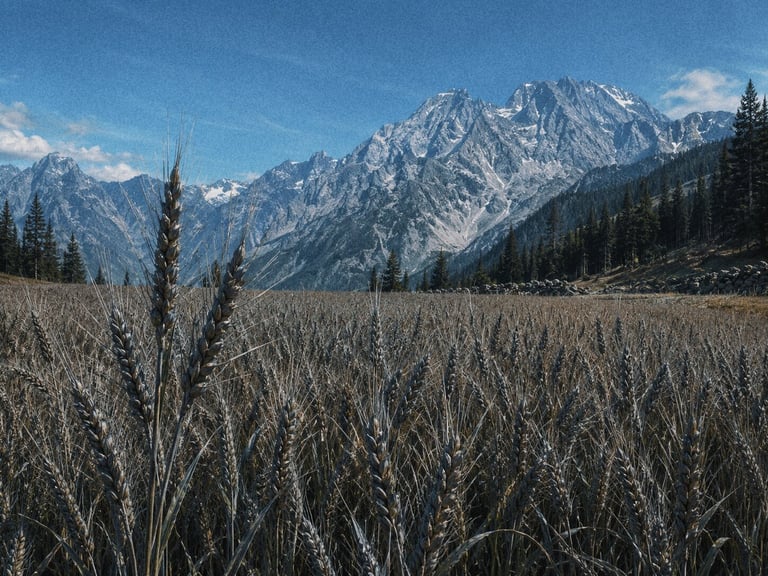
Kharn thrived in the colder climates of the Highlands, where the grain proved remarkably resistant to disease and harsh weather alike. It was commonly used in the making of Silvonian crispbread and pudding, porridge, and ale. Distilled and aged, it produced the strong spirit known as kharnashky.
The grain was infamous for its natural defense mechanism: rows of sharp, thornlike spikes that made harvesting and threshing slow, bloody work. Because of this, kharn had earned the nickname scourge-grain among farmers and laborers.
Baggats, however, paid the spikes no mind and grazed on the crop with cheerful indifference.
Kharn crispbread or Silvon bread was a staple food of the Highlands: dark, dense flatbread baked until hard enough to keep for seasons through snowbound winters and long journeys. The bread shattered with a sharp crack when broken and was often eaten with baggat butter and cheese. Highland families commonly stored rings of the bread hung from rafters and ceiling poles.
Kharn pudding was a heavier affair altogether. Made from ground kharn flour slowly cooked with dark syrups, malt, and ale until it thickened into a deep brown paste, the dish possessed a rich sweetness balanced by bitterness and the earthy taste of the grain itself. It was traditionally left to rest for days in the cold before eating, which deepened the flavor further. Outsiders often found the pudding strange in both appearance and texture, but among Highlanders it was considered comforting food, especially during the long winter festivals.
Orat
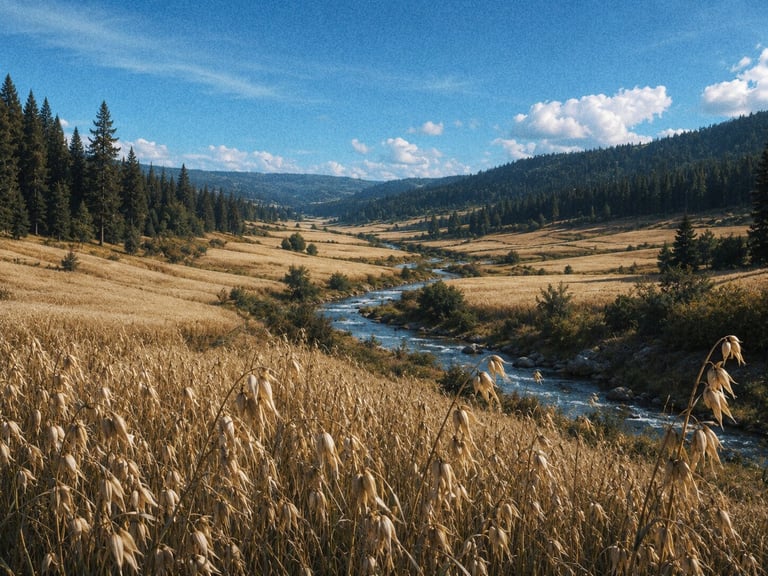
Orat was the staple crop of the higher inland regions. The grain grew in clustered husks shaped like small lanterns and was prized for the dense, hearty bread it produced. It was also eaten on its own when baked, especially during travel or winter months, when preserved foods became essential.
Roasted orat was used in the making of orot, the dark, bitter drink favored throughout the Highlands, as well as in brewing ale. When distilled and aged, it produced a strong spirit known as orashky.
Mallang
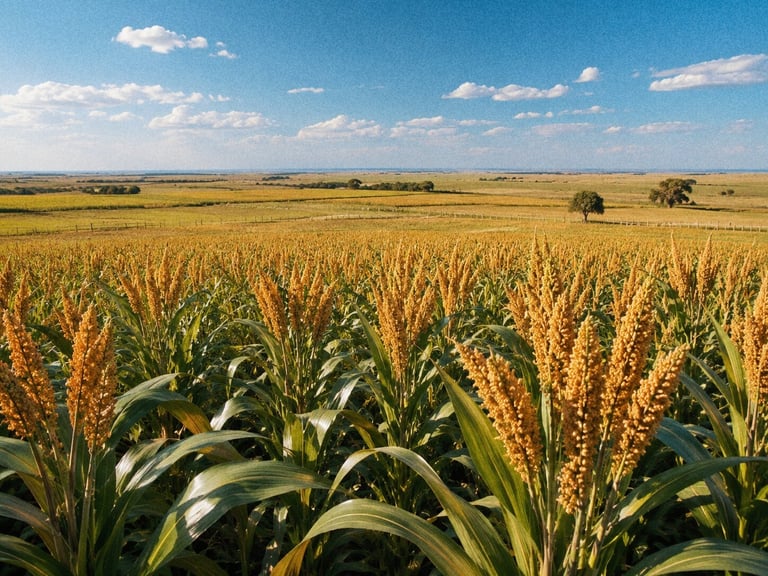
Mallang thrived across the lowlands that stretched along the mid-Mainland-Seleria axis, a fertile region once a seabed, collectively known as the Mallands. It formed the foundation of most lower Mainland cuisine and was prepared in countless ways: ground and baked into breads, boiled into porridge, eaten plain from the oven, or worked into the fried foods found in nearly every market and roadside stall.
Once dried, mallang kept well in storage, and was exported overseas in great quantities. In some parts of Antoria, it had earned the nickname yanang.
From mallang also came malashky, the aged spirit for which the Mallands were nearly as famous as the grain itself.
Mallang’s versatility made it the foundation of countless Yonian street foods, especially in the crowded eastern ports and inland market cities where fried food stalls lined entire avenues. Most were cheap, filling, and heavily dressed with yarm.
Some of the more common delicacies included:
Stuffed mallang fritters, crisp on the outside and soft within, filled with minced meat, river fish, spiced roots, or melted curds, then drenched with hot yarm before serving.
Mallang skewers, dense cubes of fried dough threaded onto sticks with strips of smoked meat or jagoline slices, brushed repeatedly with sweet yarm glaze over open coals.
Crisped mallang ribbons, thin strips of dough twisted and deep-fried until brittle, often sold in paper wraps beside docks and caravan yards. Vendors dusted them with kibrat spice or brushed them with smoky yarm oil.
Pan-fried mallang cakes, browned until crackling at the edges and commonly topped with shredded borkh meat, fermented vegetables, and thick black yarm.
Yarm dumplings, soft fried pockets stuffed with mashed matate and carpul and served floating in a bowl of warmed yarm sauce rich with garlic and toasted narnut oil.
Dockhand rolls, heavy fried cylinders of mallang stuffed with chopped ranck sausage, onions, and scraps of roasted meat. Cheap, greasy, and notorious for staining clothes with dripping yarm.
Sweet mallang buns, fried golden and glazed with reduced jagoline syrup mixed into sweetened yarm, producing the salty-sweet flavor favored in many eastern cities.
Traveler’s crisps, thin fried sheets of pressed mallang brushed with oil and hardened for storage. Though plain on their own, they were commonly softened with hot yarm poured over them at roadside stalls.
Ashcakes, blackened rounds of mallang dough cooked directly against hot stones or coals, then split apart and soaked with buttery yarm sauce before eating.
Market knots, twisted ropes of fried mallang dough lacquered with sweet yavana syrup and sprinkled with crushed karacho seeds for a balance of sweetness and sour spice.
Shahel
or Ikhanic noodle
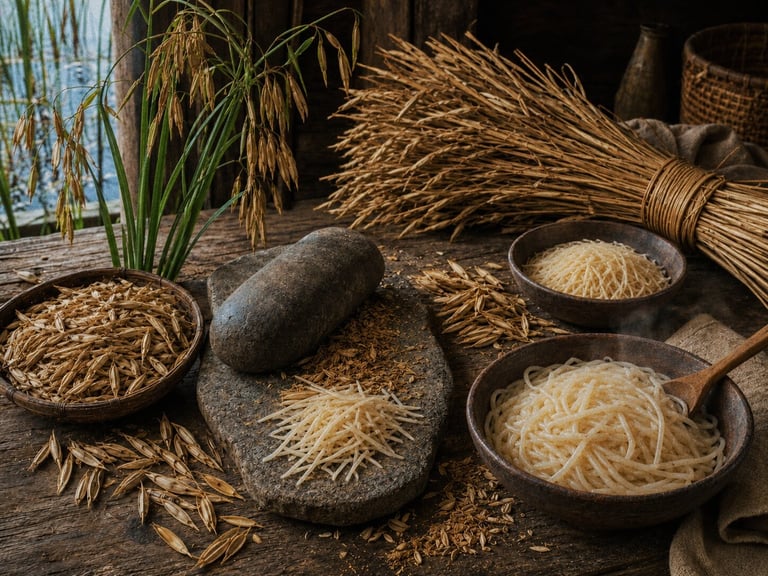
Shahel was native to Milonia. It consisted of long, narrow grains an inch or two in length, scarcely thicker than rice. Each grain was enclosed in a tough hull that had to be harvested, dried, and cracked open by rolling it against a hard surface.
An entire culture of preparation surrounded shahel. The grains were not to be left so hard they snapped when bent, nor cooked so soft they turned to paste and strands.
The crop was a staple throughout the moist lowlands of western Milonia. Some was cultivated in southwestern Ikharonia, though it never grew particularly well in Ionia proper. On the Mainland, it was commonly called the Ikhanic noodle.
Ba-bean
Ba-bean was an unsung staple for many; the nutritious bean grew easily in poor soil.
Drinks
Alcoholic Beverages
Kharn ale was brewed from kharn grains and was very popular in the western Mainland. Countless local variations existed.
Jagoline cider was made from squeezed jagoline fruit juice. It was a commodity in the coastal regions, but less so in the Highlands.
Sindarine cider was native to Seleria. It bore a distinctive yellow color.
Strong Alcohols
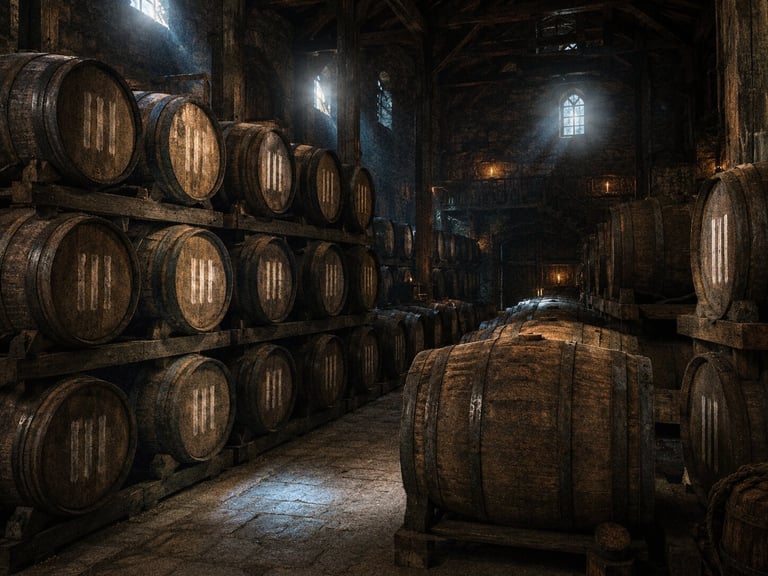
Bonshac or Cartidgan sugar cane rum, was one of the most iconic distilled spirits, brought about by Palpurians. It came in three common casket strengths: single bonshac, double bonshac and triple bonshac, based on the years it was aged in the fired barrels.
Kharnasky was essentially a distilled kharn grain spirit aged in barrels. It had a dry, sharp, but rich, deep aroma. Favored in the western Mainland.
Malashky was a distilled mallang grain spirit aged in barrels. It bore a soft, sweeter, richer taste maybe closest comparable to corn. Favored in the eastern Mainland and Seleria.
Orashky was the third spirit type made from orat grains. It had the strongest taste and most certainly divided opinions. Native to Metoria, Valon and the Highlands regions.
Jalorine was straight distilled alcohol that could be made essentially from anything fermentable, usually leftovers. It was the choice of Silvonians on most occasions.
Arcanum spirits was a class of spirits bearing the Arkhanic root aroma, which might be akin to licorice. Despite the legends, it was not a hallucinogen.
Renckbooze was name for anything-goes - distillate of the Iron Pirates, with the sole purpose of getting drunk. It was most commonly very harsh-tasting, and very strong, too.
Teas
Denna was synonymous to tea in Silvon language. The denna flower extract tea came in countless flavors and styles.
Thilian tea was a thilian flower exctract, bearing sweet, honey-like aroma.
Catasolaean tea was a Palpurian herbal mixture, bearing uniquely rich aroma. Its exact composition was often a personal secret, but it included ratios of common Palpurian herbs.
Harman tea or Harman tree bark extract was an Ikharonian commodity, bearing earthy, rich flavor profile.
Yaliflower tea was made from Yaliwood tree flowers, bearing an unique floral, nutty aroma with hints of honey. Yalis often dyed the tea purple with yaliwood leaf extract.
Other drinks
Daal bean brew was made from ground and roasted daal tree nuts. It was dark brown to black in color and was consumed hot.
Orot was roasted orat grain brew, which had rich, nutty, earthy aroma. One consumed it steaming hot, others cold.
Minatsi drink was a sweet beverage with infused minatsi leaf extract native to Silverland. It was made from the leftovers of the extraction process of the minatsi drug, which caused it to contain traces of it.