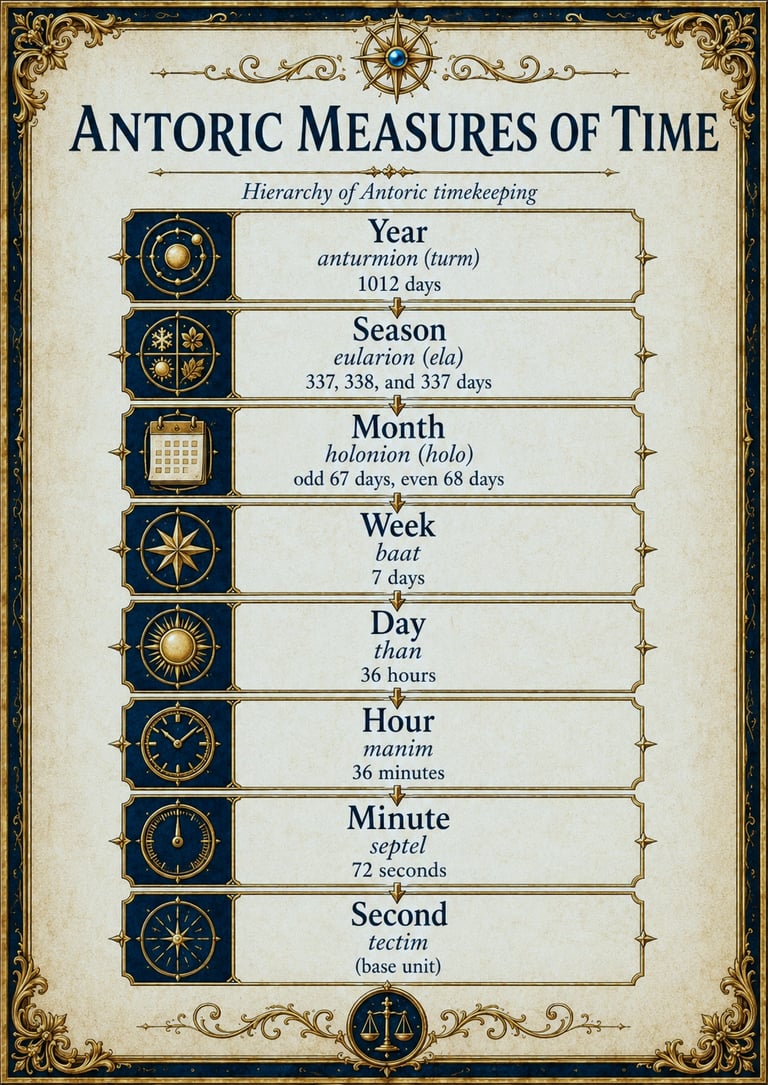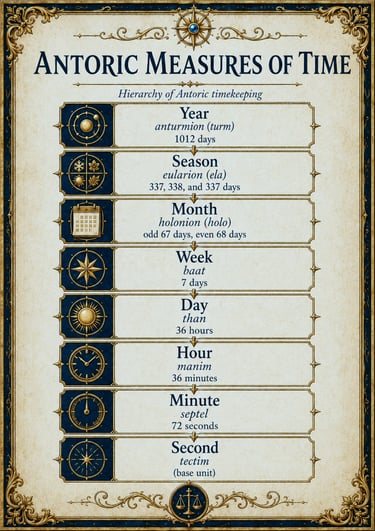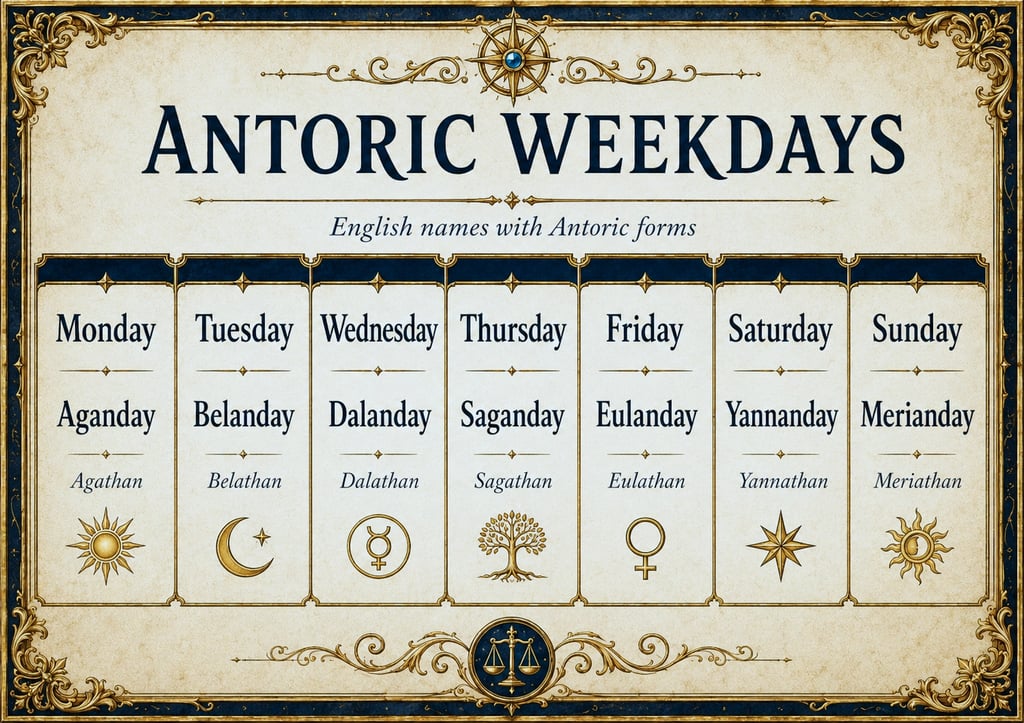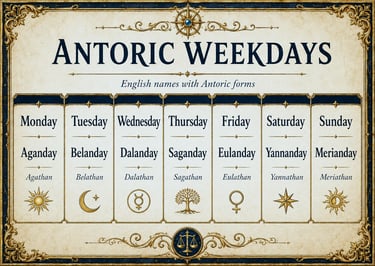


THE ANTORIC CALENDAR
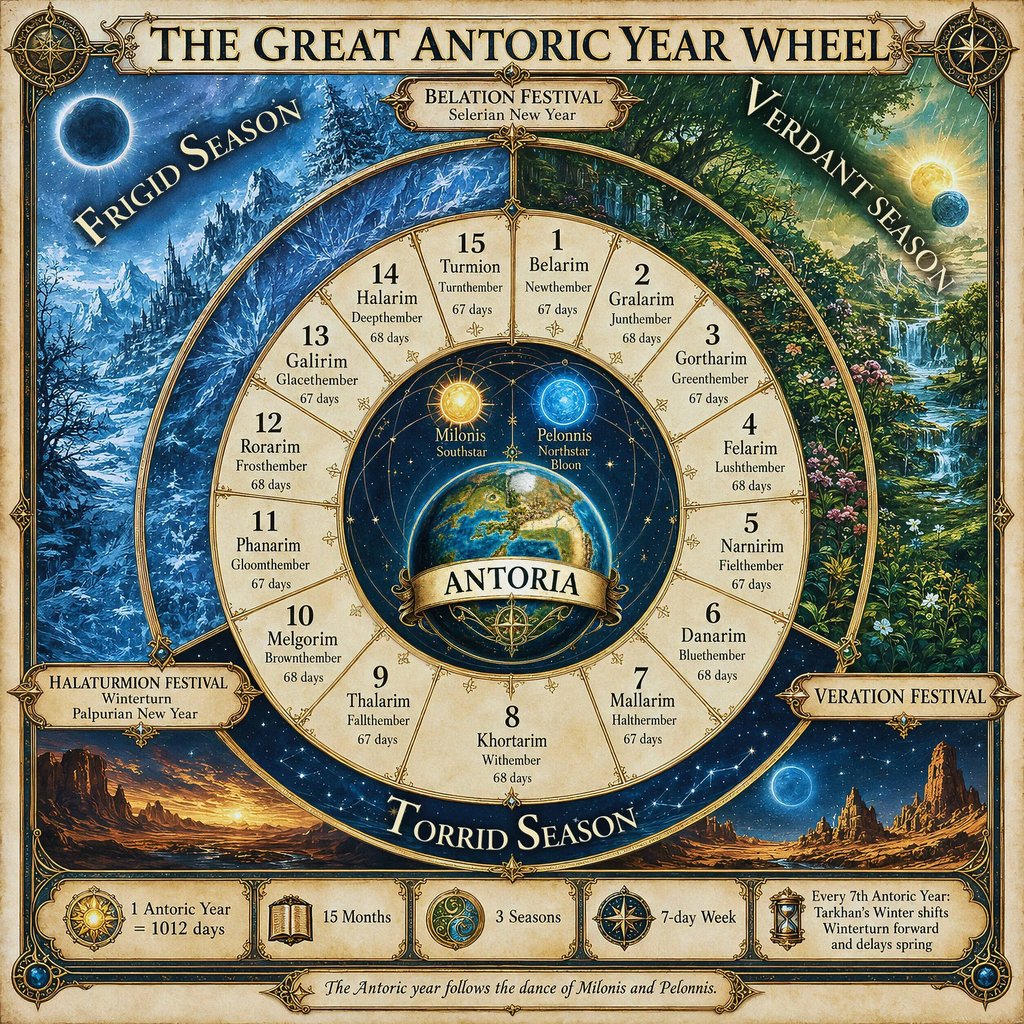
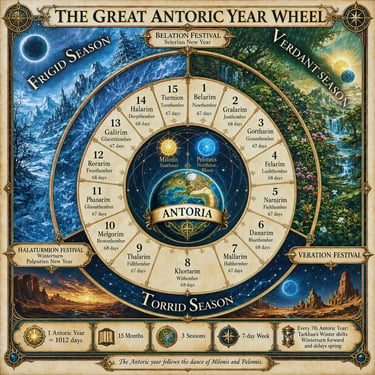
The Yonians use the Selerian calendar, introduced by Emperor Yonturil in the zero year of the Seafall. This system replaced the Methurmic calendar, which had begun 720 Antoric years earlier with the cataclysmic eruption of Seleturm supervolcano.
The Perilleans use the Palpurian calendar, which became widespread with the rise of their colonial empire. It begun in 12 Selerian Era, from the League of the Nine Athelions.
A key difference between the calendars lies in their New Year celebrations:
· The Selerian year starts in spring (Belation).
· The Palpurian year begins at Winterturn (Halaturmion).
This mismatch creates a one-third-year variance, which has been adjusted for clarity in these Chronicles.
Antoric Year
The Antoric year consists of three distinct seasons: the Verdant, the Torrid, and the Frigid, which arise from the interaction of the golden Sun and the azure Bloon, the twin stars of the Antoric System. They are known as Milonis and Pelonnis, or Southstar and Northstar.
· Verdant: Begins with the appearance of the Sun from behind the Bloon. In many places, this is also called the rainy season.
· Torrid: The Bloon begins to appear at night, creating the nightless night, the Bluing.
· Frigid: The Bloon covers the Sun, plunging the land into a pale, eternal azure twilight called the Everbluing, resulting in temperatures plummeting.
Every seventh Antoric year, the planet Tarkhan disrupts this cycle, causing Tarkhan’s Winter, which brings the Winterturn forward and delays the arrival of spring.
The moon follows a fifteen-month cycle, though in certain southern regions, it follows a thirteen-month cycle instead.